
Water polo scholarships in the USA: study and play at college
For many water polo players in Europe, this probably sounds familiar: early-morning and late-evening training sessions with your club, while trying to keep up with school in between. In the United States, the setup is completely different. Athletics and academics are part of one integrated system.
Dreaming of earning a water polo scholarship at an American university? There are several routes and opportunities worth exploring. College water polo in the United States offers competitive programs, professional coaching and interesting financial opportunities for international players. Since the 2025–26 academic year, NCAA rules surrounding scholarships in Division I have also changed, creating more opportunities for some programs to provide financial support to student-athletes.
On this page, we explain how college water polo in the USA works, what scholarship opportunities are available and what coaches look for when recruiting international players.
How do water polo scholarships work in the USA?
Who decides how much scholarship money you receive?
The head coach plays an important role in deciding how available scholarship money is distributed across the roster. In water polo, however, it is uncommon for coaches to have enough athletic scholarship money to offer every player a full ride. Instead, the available scholarship budget has to be divided strategically across the team. A player who fills a specific need within the roster may therefore be in a stronger position when scholarship offers are discussed. That could be a goalkeeper, but it could also be a strong center, a left-handed player or a versatile field player.
Ultimately, the value of your water polo scholarship depends on your level, what the team needs and how much scholarship funding is available.
What changed in 2025–26?
For NCAA Division I, the rules changed significantly beginning with the 2025–26 academic year. The previous scholarship limits of 4.5 full scholarship equivalents for men and 8 for women were replaced, for Division I programs covered by the new House rules, by a roster limit of 24 players. Within that limit, universities can choose to provide financial support to more student-athletes.
It is important to understand that universities are not required to provide an athletic scholarship to all 24 players. In practice, the amount of scholarship money available for college water polo often depends on the budget of the university’s aquatics program, which may also include swimming and diving.
NCAA Division II, the NAIA and junior college programs currently operate under different scholarship limits. As a result, the financial opportunities available can vary significantly between divisions and universities.
A spot on a team also does not automatically mean that you will receive an athletic scholarship. At the same time, the value of a scholarship can vary considerably from one player to another.
Combining scholarships: athletic, academic and international
Because an athletic scholarship in water polo rarely covers the full cost of attending college, combining different sources of financial aid can make a significant difference. Where possible, Made Scholarships helps students combine three different types of scholarships:
- Athletic scholarship: the percentage of the available team scholarship budget awarded to you by the coach.
- Academic scholarship: merit-based financial aid awarded by the university based on your high school grades (GPA) and test scores, such as the SAT or ACT.
- International scholarship: institutional scholarships or tuition discounts specifically available to international students.
By combining these different forms of financial aid, a partial athletic scholarship can become a much more attractive overall college package.
How hard is it to get a water polo scholarship?
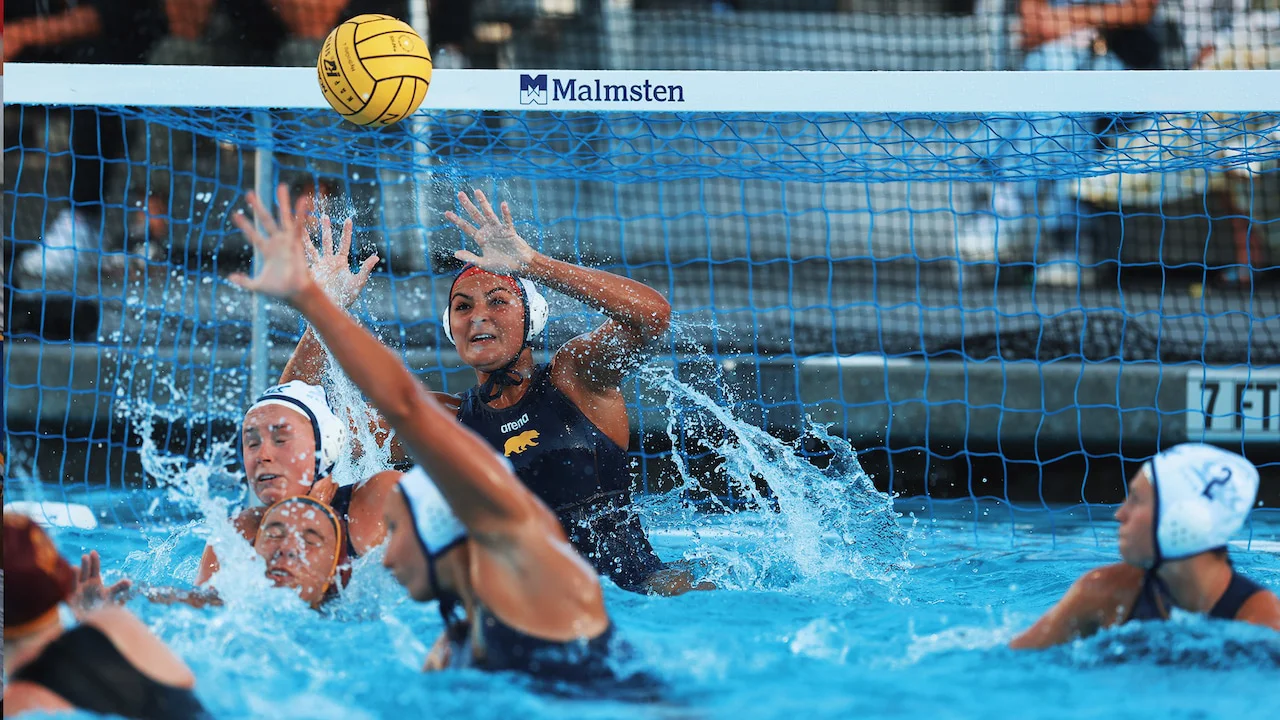
Water polo is a relatively small sport within the American college system. The number of varsity programs is limited, and strong teams often have relatively small rosters. As a result, competition for spots at popular programs can be intense.
At the same time, international players are highly visible in college water polo. Particularly at stronger programs, it is common to find athletes from Europe and other parts of the world. American coaches are therefore accustomed to recruiting internationally and regularly look beyond the United States for talented players.
What do coaches look for in your video footage?
For water polo, a strong recruiting video is important, but coaches at many serious programs will also want to see full-game footage.
Game footage allows coaches to evaluate how you play away from the ball, how you respond under pressure and what role you actually play within a team.
They will look at things such as:
- Transition speed: how quickly do you switch from offense to defense after losing possession, and from defense to offense when your team wins the ball back?
- Game awareness under pressure: do you make the right decisions in complex game situations?
- Positioning: how do you move without the ball, and how well do you function within the team’s structure?
- Physical qualities: explosiveness, speed and strength in the water.
- Position-specific skills: for example, goalkeeping, center play or shooting ability.
- Game production: statistics such as goals, assists, exclusions drawn and interceptions can provide additional information about your overall performance.
For goalkeepers, coaches may also look at saves and the types of shots they are able to stop.
The complete picture matters as well. Coaches will also consider the level of your current team, your age, academic profile and whether you fit their future roster needs.
Opportunities for women vs. men
Women’s water polo can offer more scholarship opportunities in the United States than men’s water polo. Because of Title IX, which requires schools to provide equitable athletic opportunities for men and women, universities generally have more women’s water polo programs than men’s programs. As a result, female student-athletes may have more opportunities at certain universities.
That does not automatically mean that every female player will have an easier time earning a large scholarship. The exact opportunities depend on the university, the program and the financial resources available.
The same principle applies to both men and women: don’t focus only on the division or the number of available teams. The most important question is which programs genuinely match your level and profile.
What does a water polo scholarship cover?
Tuition
This is usually the largest expense, ranging from around $10,000 to $70,000 per academic year.
Training gear
Caps, competition swimwear, robes, dryland clothing and training equipment are often provided by the team.
Housing and meals
Your campus accommodation and daily meals through a meal plan.
Health insurance
The required university health insurance for international students.
Books and course materials
Required textbooks, course materials and software.
Personal Expenses
With a full ride, you may also receive a monthly allowance to help cover personal expenses. In some cases, this could be around $200 to $500 per month, although this is relatively rare for water polo scholarships.
All travel expenses for away games and conference tournaments, including flights, team hotels and meals, are generally covered by the university’s athletics or aquatics department. Student-athletes are not expected to pay these team travel expenses themselves.
Life as a college water polo player: training and support
As a student-athlete, you become part of a high-performance environment built around the physical demands of water polo. Your daily support may include:
- Specialized coaching staff: a head coach overseeing the team, supported by assistant coaches who may work with specific areas such as goalkeeping, shooting or tactical development.
- Aquatics facilities: regular access to the university’s pool facilities, alongside fitness and strength-training areas.
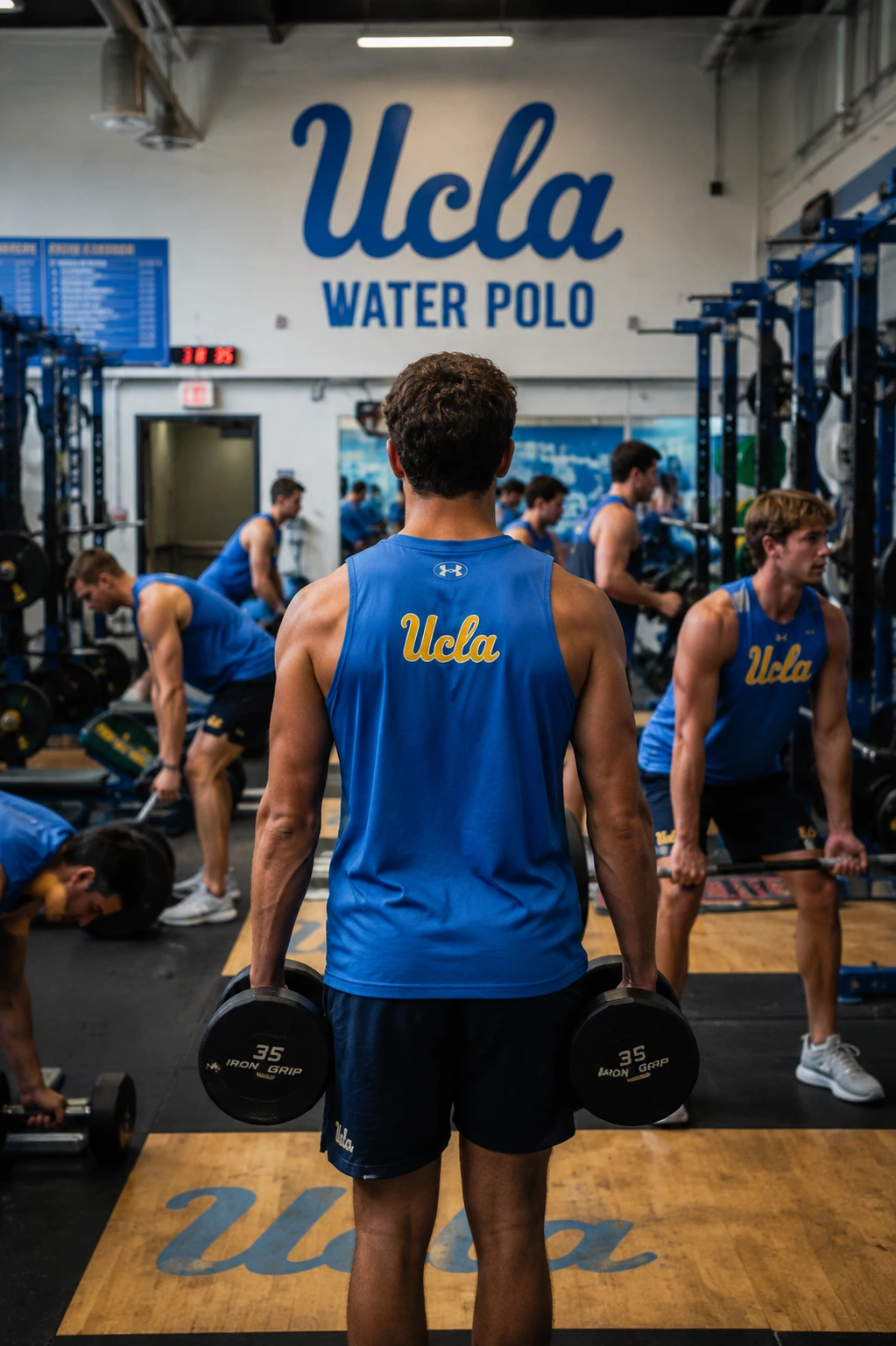
- Sport-specific strength training: a strength and conditioning coach who can tailor your program around areas such as shoulder stability, explosive leg power and rotational strength.
- Injury prevention and recovery: athletic trainers who help with injury prevention, treatment and recovery.
- Sports nutritionist: Nutritional guidance to support the high energy demands of regular water polo training.
Two seasons, two different calendars: men in the fall, women in the spring
The American college water polo calendar is divided differently from many other college sports. Men’s and women’s water polo have their main competitive seasons at different times of the year.
Men play their official season in the fall, usually from August through early December. The spring is generally used for physical development and non-championship competition. Women, on the other hand, train during the fall and play their main competitive season in the spring, from January through mid-May.
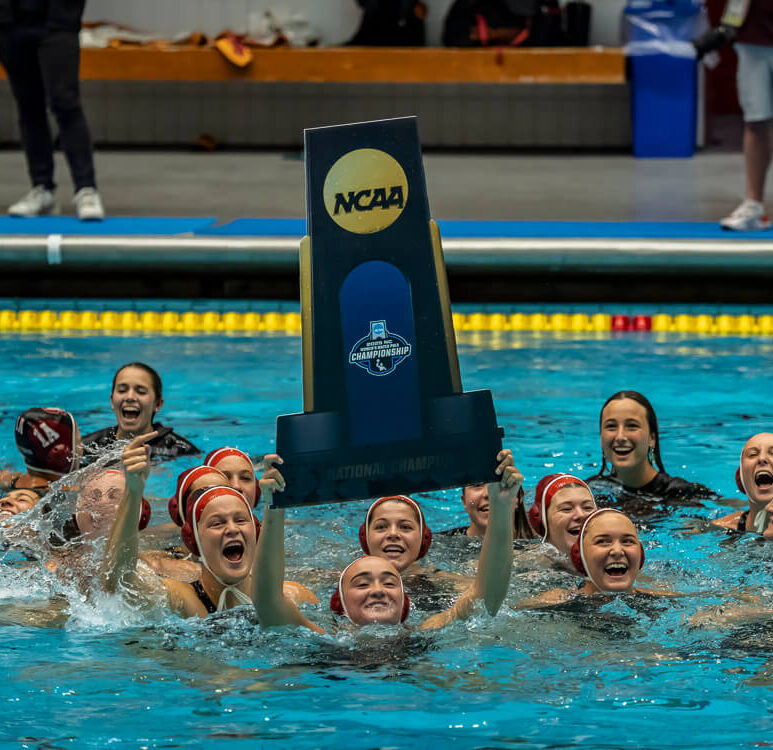
Conference tournaments play an important role in the path to the national championship. Depending on the conference, teams may qualify automatically or earn selection based on their ranking and results.
Because the official women’s season takes place in the spring, starting in January can be logistically possible at some universities. However, most international student-athletes still begin at the start of the academic year in August.
What is the best college for water polo?
There is no single university that is the best choice for every water polo player. The right school depends on your playing level, position, academic profile and financial situation. In NCAA Division I, Stanford, UCLA, USC and Cal are traditionally among the best-known and strongest water polo programs. Universities such as Princeton, Harvard and Brown also have competitive teams while combining water polo with a strong academic reputation.
Beyond Division I, the opportunities are distributed differently
College water polo in the United States has a relatively small and unusual landscape. In many sports, you can easily look at NCAA Division I, Division II, Division III, the NAIA and junior colleges. Water polo works a little differently.
The largest number of college water polo programs can be found in the California Community College Athletic Association (CCCAA), followed by NCAA Division I. NCAA Division III also has a number of programs, while Division II has only a limited number of teams. The NAIA plays only a very small role in college water polo, with just one men’s and one women’s program.
This also means that a player who is not yet at NCAA Division I level does not automatically have a large number of Division II or NAIA programs to choose from. There simply are not that many teams.
For many international water polo players, two other routes are therefore worth considering. One option is a California community college, where a relatively large number of water polo teams are available. CCCAA schools do not offer athletic scholarships, but the total cost of studying is often lower. After two years, players can move on to a four-year university with a stronger athletic and academic profile.
Another option is NCAA Division III. Athletic scholarships are not allowed at this level, but international student-athletes may still receive academic scholarships or other forms of financial aid. A Division III university can therefore still be an attractive financial option, even if you are expected to cover part of the costs yourself.
For water polo, the best option is not always the highest possible division. Because the number of programs varies so much between divisions, we look at the full picture: your playing level, the teams available, your academic profile and what each university can offer financially.
What does a typical weekday look like?
Your schedule is structured around both training and classes, allowing you to combine water polo with your studies. Want to see what student-athlete life actually looks like? Watch videos of how some of our athletes spend their day.
6:00
Strength & conditioningDepending on the program, your day may start with strength training, swimming or an early session in the pool.
7:45
Shower/BreakfastTime to shower and have breakfast in the dining hall.
8:30
ClassesClasses, lectures and academic work.
11:45
LunchGezamenlijke Lunch with teammates and friends on campus. op de campus.
12:30
ClassesTime for afternoon lectures or classes.
14:30
PracticeUsually the main training session of the day. This can include swimming, tactical work, technical drills, game situations and match preparation.
17:30
Recover/Shower/DinnerAfter practice, there is time for recovery, treatment with the athletic trainer if needed, and dinner.
19:00
Study/LeisureTime for homework, studying or relaxing. Many student-athletes also attend games of other college teams to support their fellow athletes.
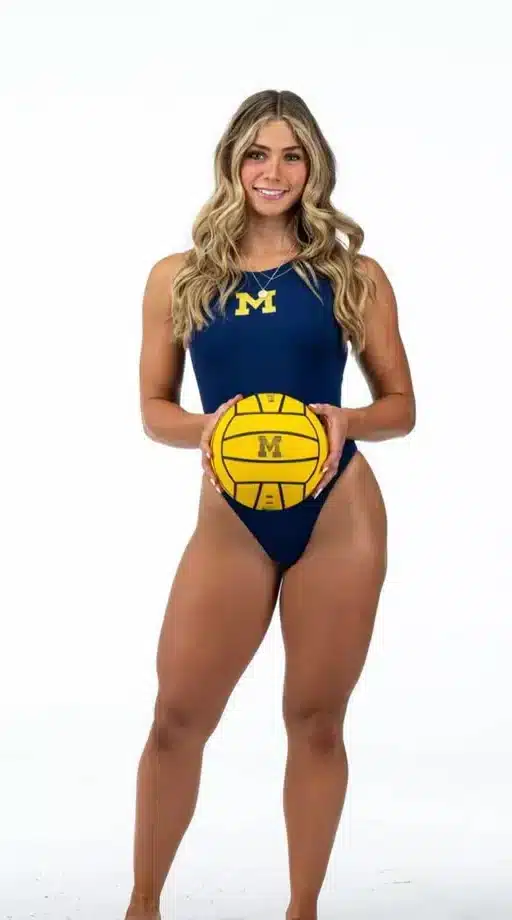
3 things you may not know about college water polo
- A unique championship structure: College water polo has a different championship format from most other NCAA sports. In both men’s and women’s water polo, NCAA Division I and Division II teams compete together for one NCAA National Collegiate Championship. NCAA Division III also has its own national championship, organized under USA Water Polo.
- A growing international presence: International players have become increasingly visible in college water polo. NCAA Division I men’s water polo saw one of the fastest increases in international student-athletes, growing from 7% in 2010 to 19% in 2016. That was the largest increase among all Division I men’s sports during that period, ahead of sports such as soccer and tennis. Across all divisions, international players account for roughly 8 to 9% of student-athletes, although that percentage is considerably higher at many top Division I programs. Coaches actively recruit in Europe and other parts of the world, creating real opportunities for talented Dutch and other international water polo players.
- A direct path to the highest level: The American college system is one of the main development routes for elite American water polo players. At the Paris 2024 Olympic Games, every player on the U.S. women’s national team had an NCAA background. The bronze-medal-winning U.S. men’s team was also made up entirely of former college players from Cal, Stanford, USC, UCLA and Pacific. Across the Paris Games, 23 water polo medalists had competed in the NCAA, representing several different countries.
Find out what your water polo scholarship could be worth
You do not need to know exactly which university or division is right for you yet. Made Scholarships can help you explore your options. Request a free, no-obligation consultation and we will look at your game footage, high school grades and academic profile alongside the current recruiting requirements of American water polo coaches. This gives you a clearer idea of which college level may be the best fit for you and where you could have the strongest scholarship opportunities.
Curious about your chances?
Explore your options with a free, no-obligation evaluation.