

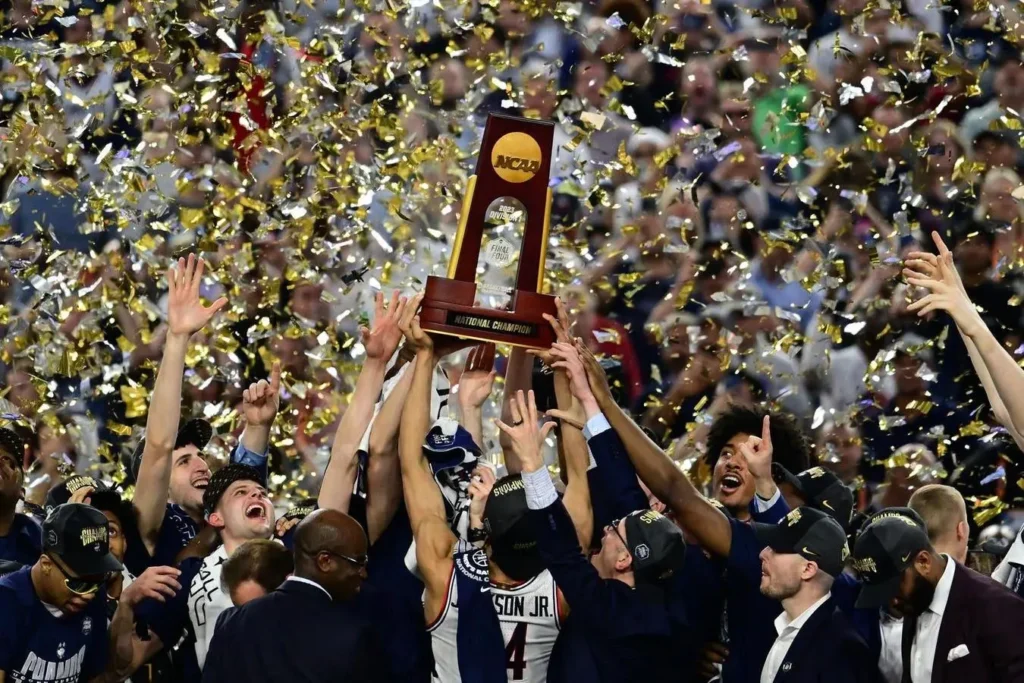
If you are researching studying and playing sports in America, you will quickly encounter the acronym NCAA. Coaches mention it during recruiting calls, universities feature it on their websites, and you see it constantly across social media. But what actually is the NCAA? And more importantly: what does the NCAA mean for you as an international student-athlete? Many parents and athletes assume the NCAA is a single competition reserved exclusively for elite world-class athletes. That is a common misconception. The NCAA consists of hundreds of universities across different competitive levels, where thousands of international students successfully combine high-level sports with their degree. In this article, we explain how the NCAA operates, how its divisions are structured, how scholarships work, and how to determine if the NCAA matches your athletic and academic ambitions.
What is the NCAA exactly?
The NCAA (National Collegiate Athletic Association) is the largest and most prominent governing body for college sports in the United States.
The NCAA establishes regulations for university athletic competitions and oversees:
- Academic and athletic eligibility for student-athletes
- Rules regarding the awarding of athletic scholarships
- Season lengths and maximum weekly practice hours
- The organization of regional conferences and National Championships
In short: the NCAA ensures that college sports in America remain fair, structured, and executed at a high level.
The three NCAA divisions explained
The NCAA is divided into three distinct competitive levels: Division I (D1), Division II (D2), and Division III (D3). The differences between these divisions involve not only athletic standards, but also institutional size and financial aid structures.
NCAA Division 1 (D1)
This is the highest and most visible level of US college sports. Division 1 institutions feature massive athletic budgets, major stadiums, and extensive media coverage.
- Athletic level: Very high to elite world-class.
- Scholarships: Both Full Scholarships and partial athletic aid are available.
- Focus: High-performance athletics; training intensity is extremely high.
NCAA Division 2 (D2)
Division 2 offers a fantastic balance between high-level athletics and academic development. Competition remains intense, but there is a more balanced relationship between study, sport, and campus life.
- Athletic level: Very high to competitive regional top tier.
- Scholarships: Primarily utilizes partial athletic scholarships that stack exceptionally well with academic merit aid.
- Focus: Balanced combination of academics and high-level sports.
NCAA Division 3 (D3)
Division 3 is the largest division within the NCAA. The most important rule regarding D3 is that member schools do not offer athletic scholarships.
- Athletic level: Varies from competitive regional to high level.
- Scholarships: No athletic scholarships, but schools frequently offer generous academic merit scholarships based on your grades and test scores.
- Focus: Academics come first, complemented by passionate athletic competition.
Academic requirements and the NCAA Eligibility Center
To compete in the NCAA, you must be officially certified as “eligible” by the NCAA Eligibility Center.
The NCAA evaluates two main components:
- Your academic background: You must meet minimum core-course requirements and maintain an acceptable high school grade point average (GPA).
- Your amateur status: You must not have signed a professional contract in Europe or earned money that jeopardizes your amateur standing.
Navigating NCAA Eligibility Center registration can be administratively complex. We guide our athletes step-by-step through submitting the correct official documents.
Are there other athletic associations outside the NCAA?
Yes, absolutely! While many focus solely on the NCAA, there are two other major, highly respected college athletic associations in America:
- NAIA (National Association of Intercollegiate Athletics): Offers high-level athletics comparable to NCAA D2, featuring flexible recruiting rules, great scholarship opportunities, and a personal campus experience.
- NJCAA (JuCo): A 2-year pathway at a community college ideal for athletes seeking an academic or athletic stepping stone before transferring to an NCAA D1 or D2 program.
Discover the exact differences between the NCAA, NAIA, and NJCAA in our overview guide.
Is the NCAA the right choice for you?
Whether the NCAA fits your path depends on your athletic level, high school grades, budget, and personal goals.
At Made Scholarships, we don’t fixate on brand names or division labels. We focus on finding the best overall fit: a program where you get meaningful playing time, compete for championships, earn a valuable degree, and have an unforgettable experience within your family’s budget.
Explore your opportunities in the NCAA
Want to know if your athletic level and academic background match NCAA, NAIA, or NJCAA standards?
During a free and non-binding intake consultation, we analyze your profile and provide an honest assessment of your athletic and scholarship opportunities in America.